Developing a Growth Mindset
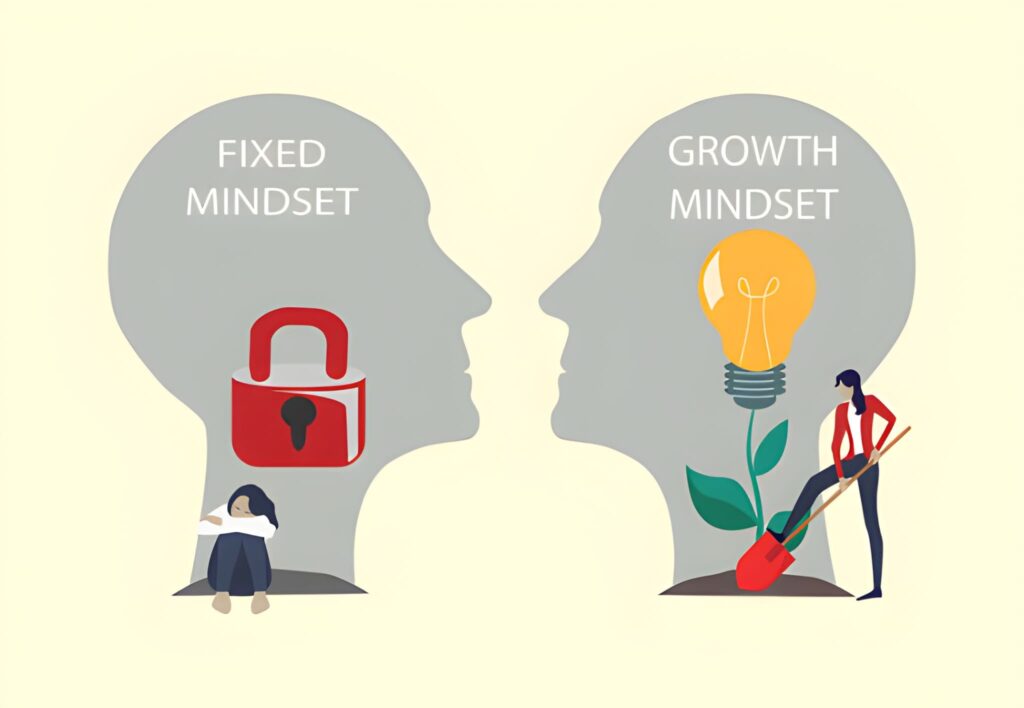
The way people think about their abilities can have a powerful influence on how they learn, work, and respond to challenges. Some people believe that intelligence and talent are mostly fixed, while others see abilities as qualities that can improve through effort, practice, and experience. This second approach is often described as a growth mindset.
Developing a growth mindset does not mean believing that everyone can achieve everything instantly. Instead, it means understanding that improvement is possible. Skills can be developed, mistakes can become lessons, and challenges can provide opportunities to grow. This way of thinking can help people become more resilient, curious, and willing to keep moving forward when things become difficult.
Understanding the Growth Mindset
A growth mindset begins with the belief that abilities are not permanently fixed.
Someone may not be good at mathematics today, but that does not mean they can never improve. A person who struggles with public speaking can practice and become more confident over time.
This perspective changes the way people interpret their current abilities.
Instead of saying, “I cannot do this,” a person with a growth mindset may think, “I cannot do this yet.”
That small change in language can create a significant change in attitude.
Seeing Challenges as Opportunities
Challenges are often uncomfortable, but they can also provide valuable learning experiences.
People with a growth mindset are more likely to see difficult tasks as opportunities to develop new skills.
This does not mean they enjoy every challenge. It means they understand that difficulty is often part of the learning process.
When something feels hard, it may be a sign that the brain is working to understand something new.
Approaching challenges with curiosity instead of fear can make it easier to keep trying.
Learning From Mistakes
Mistakes are a natural part of growth.
Nobody succeeds at everything on the first attempt. Whether learning a new skill or completing an important project, errors can provide information about what needs to change.
A growth mindset encourages people to examine mistakes rather than allowing them to define their identity.
Instead of thinking, “I failed, so I am not capable,” someone can ask, “What can I learn from this experience?”
This approach turns mistakes into useful feedback.
The Value of Consistent Effort
Effort is one of the most important parts of developing a growth mindset.
Talent can provide an advantage, but consistent practice often determines how far a person can develop.
Progress may not always be visible immediately. Sometimes, people work hard for weeks or months before noticing significant improvement.
This is why patience matters.
Small efforts repeated consistently can eventually produce meaningful results.
Welcoming Constructive Feedback
Feedback can sometimes feel uncomfortable, especially when it points out weaknesses.
However, useful feedback can help people understand where they can improve.
A growth mindset encourages individuals to listen to constructive criticism without treating it as a personal attack.
The goal is not to accept every opinion without question. Instead, it is to consider whether the feedback contains something valuable.
Learning to use feedback effectively can accelerate personal and professional development.
Avoiding Comparisons
Constantly comparing yourself with others can make growth difficult.
Everyone has different experiences, opportunities, strengths, and starting points.
A healthier approach is to compare your current abilities with your past performance.
Ask questions such as, “What have I learned?” or “What can I do now that I could not do before?”
Personal progress may seem small at first, but recognizing it can build motivation and confidence.
Staying Curious
Curiosity is closely connected to a growth mindset.
Curious people are willing to ask questions, explore unfamiliar subjects, and admit when they do not know something.
They do not see a lack of knowledge as a permanent weakness. Instead, they see it as an invitation to learn.
Reading, experimenting, asking questions, and trying new activities can all strengthen curiosity.
The more curious a person becomes, the more opportunities they may discover for growth.
Developing Resilience
Life does not always follow the plans people create.
Unexpected setbacks, disappointments, and failures can happen to anyone.
A growth mindset helps people respond to these experiences with resilience.
Instead of giving up after one setback, they can consider what happened, adjust their approach, and try again.
Resilience does not mean ignoring disappointment. It means allowing yourself to experience it while still believing that the future can improve.
Applying a Growth Mindset Every Day
Developing a growth mindset is not something that happens overnight.
It is built through everyday choices.
A person can practice it by replacing negative self-talk with more constructive language, setting realistic goals, learning from feedback, and celebrating progress.
Even small changes can make a difference.
For example, instead of avoiding a difficult subject, someone might spend fifteen minutes each day practicing it. Over time, that consistent effort can lead to greater understanding and confidence.
Conclusion
Developing a growth mindset can change the way people approach learning, challenges, mistakes, and personal development. It encourages the belief that improvement is possible through effort, patience, practice, and a willingness to learn.
A growth mindset does not promise that every goal will be easy or that success is guaranteed. Instead, it teaches people to focus on progress and recognize that setbacks do not have to be permanent.
The journey of growth is rarely a straight line. There will be moments of success, uncertainty, frustration, and discovery.
What matters is the willingness to keep learning.
By embracing challenges, learning from mistakes, accepting useful feedback, and recognizing personal progress, anyone can develop a more flexible and resilient approach to life.
Ultimately, a growth mindset is about seeing potential where others might see limitations. It reminds us that our current abilities are not necessarily the final version of who we can become. With curiosity, consistent effort, and patience, there is always room to learn something new and take another step forward.